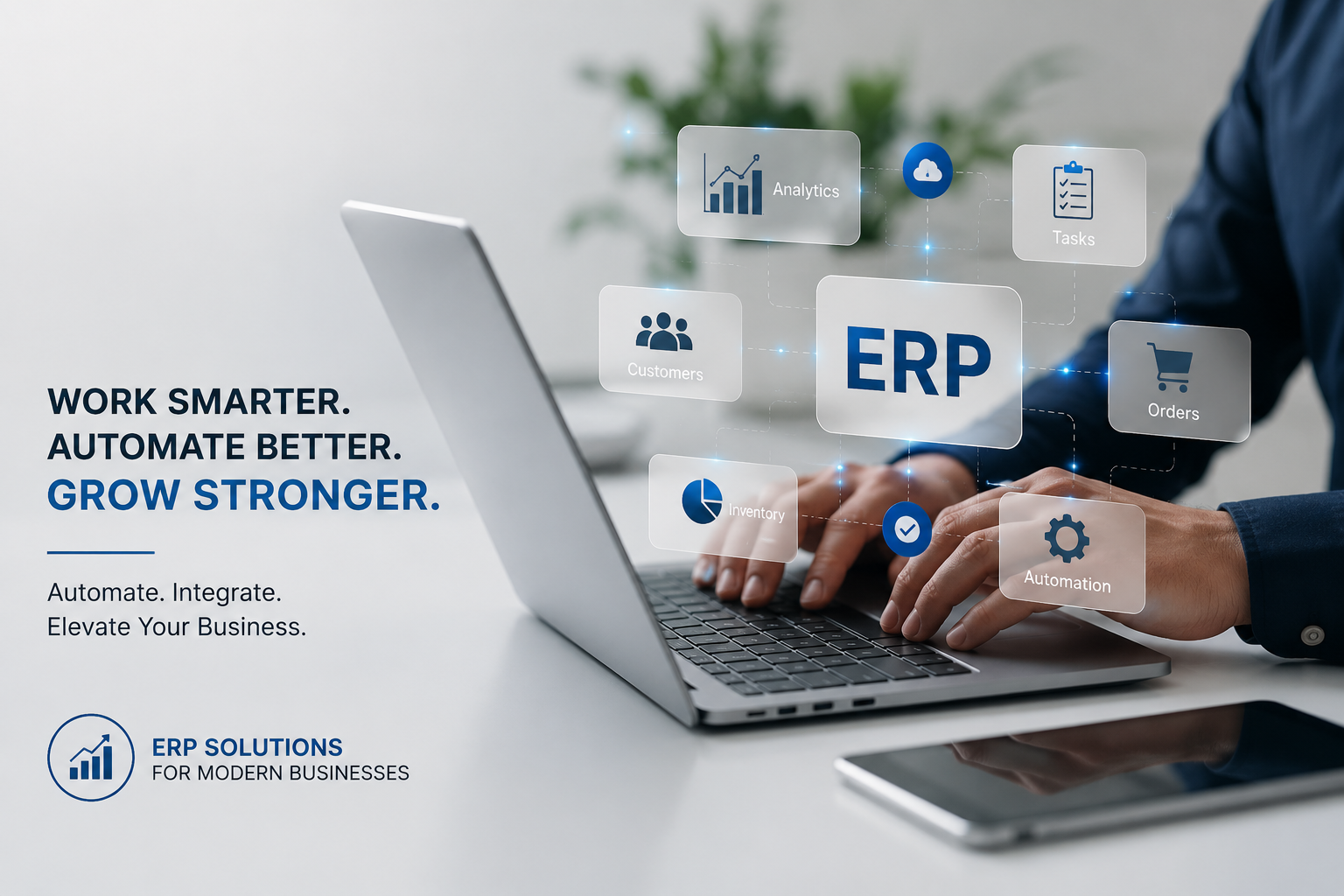
Running a business becomes more complex as it grows. What once felt manageable with spreadsheets and separate tools can quickly turn into confusion, delays, and missed opportunities. Many business owners experience these issues without realising they are clear indicators that their systems are no longer sufficient for effective business automation.
An ERP system supports business automation by bringing all your operations into one place, helping you manage data, automate processes, and make better decisions. If your business is facing the following challenges, it may be time to consider an ERP solution.
Key Points
- Poor Data Visibility: Scattered or outdated information makes it difficult to make accurate and timely decisions.
- Overdependence on Spreadsheets: Basic tools become inefficient as business operations grow, leading to errors and delays.
- Lack of Structured Processes: Without standardized workflows, operations become inconsistent and harder to manage.
- Disconnected Systems: Using multiple tools across departments creates data silos and reduces overall efficiency.
- Excessive Manual Work: Repetitive tasks slow down productivity and increase the risk of human error.
- Difficulty in Scaling: Disorganized systems make it challenging to manage growth and maintain operational control.
- Reactive Management: Solving problems after they occur instead of preventing them leads to wasted time and resources
How Business Automation Improves Data Visibility
When business data is scattered across different platforms, outdated, or difficult to retrieve, decision-making becomes slow and uncertain. Leaders depend on accurate information to guide strategy, but inconsistent data often leads to costly mistakes.
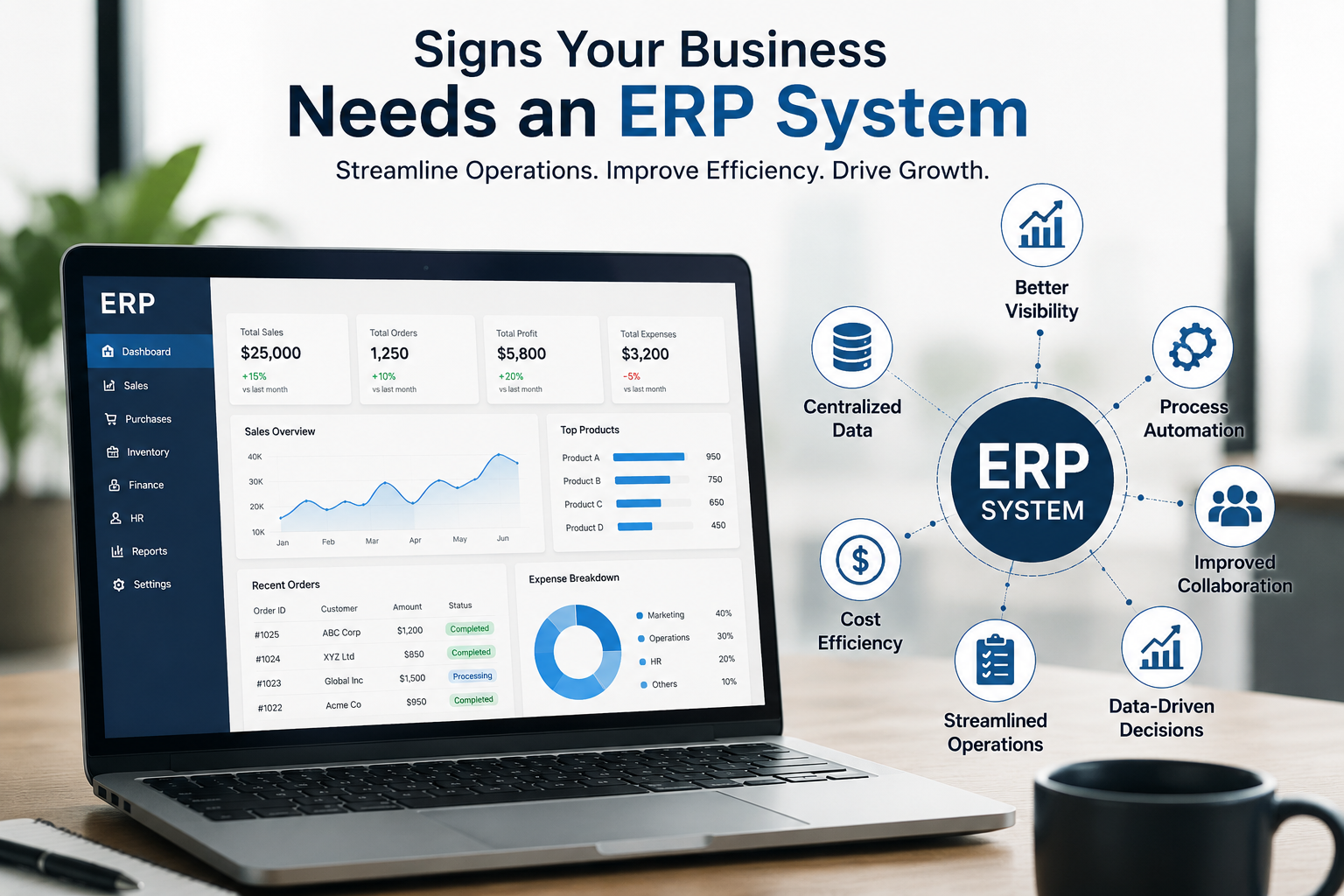
An ERP system centralizes all business data into one platform. This ensures that everyone in the organization is working with the same, up-to-date information, allowing faster and more confident decisions. Businesses worldwide use ERP systems such as SAP and Microsoft Dynamics.
Outgrowing Spreadsheets and Basic Tools
Spreadsheets may work in the early stages of a business, but they quickly become limiting as operations expand. Manual updates, errors in formulas, and lack of integration create inefficiencies that slow down progress.
ERP systems replace these limitations with structured, reliable tools designed for growing businesses. They reduce manual dependency and ensure consistency across all functions.
Lack of Structure in Daily Operations
As businesses grow, the absence of clear processes can lead to confusion and inefficiency. Teams may follow different methods, tasks may be repeated, and accountability becomes unclear.
ERP systems introduce standardized workflows across departments. This creates consistency, improves coordination, and ensures that operations run smoothly as the business scales.
Managing Multiple Disconnected Systems
Using separate tools for accounting, inventory, sales, and human resources may seem practical, but it often results in fragmented data and duplicated work. Without integration, it becomes difficult to maintain accuracy and visibility.
ERP systems bring all these functions together into a single platform. This eliminates data silos, improves communication between departments, and provides a complete view of business performance.
Too Much Manual Work Slowing You Down
If your team spends significant time on repetitive tasks such as data entry, reporting, or verification, productivity is being affected. Manual processes are not only time-consuming but also prone to errors.
ERP systems automate routine tasks, reducing the need for manual input. This allows your team to focus on more strategic activities while improving accuracy and efficiency.
Difficulty Accessing Important Information
When employees struggle to access the information they need, it slows down operations and affects decision-making. Waiting for reports or searching through multiple systems wastes valuable time.
With ERP, information is available in real time through a centralized system. Teams can quickly access insights, track performance, and respond to changes without delays.
Challenges in Scaling Your Business
Growth brings new opportunities, but it also introduces complexity. Without proper systems in place, managing resources, customers, and operations becomes increasingly difficult.
ERP systems are built to support growth. They help organize processes, improve planning, and ensure that your business can scale without losing efficiency or control.
Always Reacting Instead of Planning Ahead
If your business is constantly dealing with problems after they occur, it indicates a lack of visibility. Issues such as delays, shortages, or financial discrepancies often go unnoticed until they become serious.
ERP systems provide real-time insights and monitoring tools that help identify problems early. This allows businesses to take proactive action and avoid disruptions before they escalate.
Final Thoughts
As your business grows, relying on outdated tools and disconnected systems can hold you back. The signs are often clear, from inefficient workflows to poor data visibility and difficulty managing operations.
An ERP system is more than just software. It is a foundation for smarter, more efficient business management. By centralizing data, automating processes, and improving decision-making, ERP enables businesses to operate with clarity and confidence.
Take the Next Step in Business Automation with ROBZZ
ROBZZ offers complete business solutions designed to support your growth, from branding and graphic designing to advanced ERP systems and mobile applications. If you are ready to streamline your operations and build a stronger, more efficient business, now is the time to take the next step.